
The Man Who Made the West Wild

150 years ago today.
On August 2, 1876, Jack McCall walked into Nuttal & Mann's Saloon No. 10 in Deadwood, stepped up behind James Butler Hickok, put a revolver a few inches from the back of his head, and fired. Wild Bill stiffened, fell back in his chair, and never made a sound.
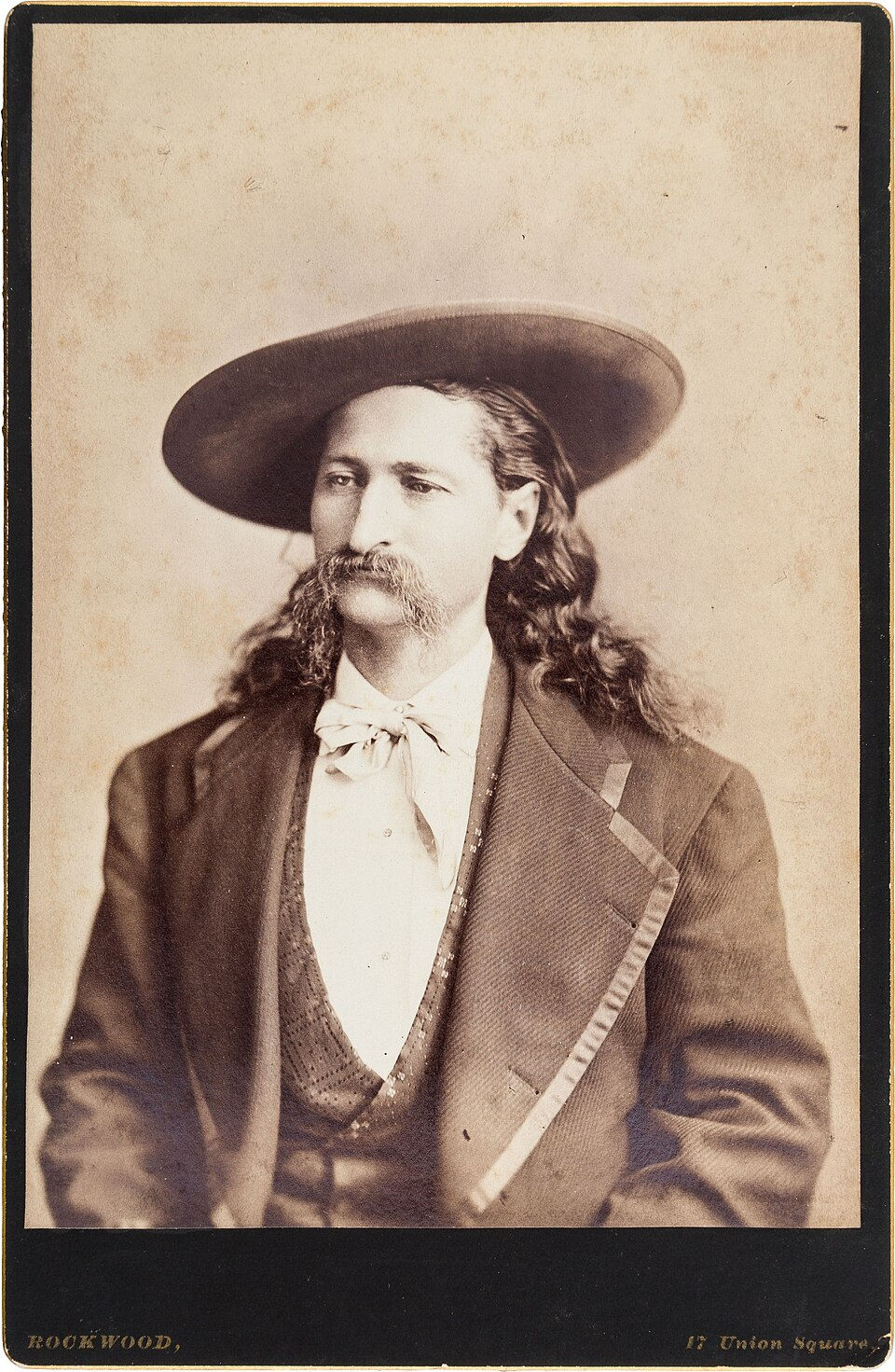
Texas Jack Omohundro had known him for eight years. They met in 1868, when a cattle drive left the young Virginian in Hays City, Kansas, where Hickok was serving as a deputy United States marshal. Five years after that, Hickok joined Jack and Buffalo Bill Cody on the road for the 1873–74 season of The Scouts of the Plains. Just long enough to establish that whatever else he was made for, it was not show business.
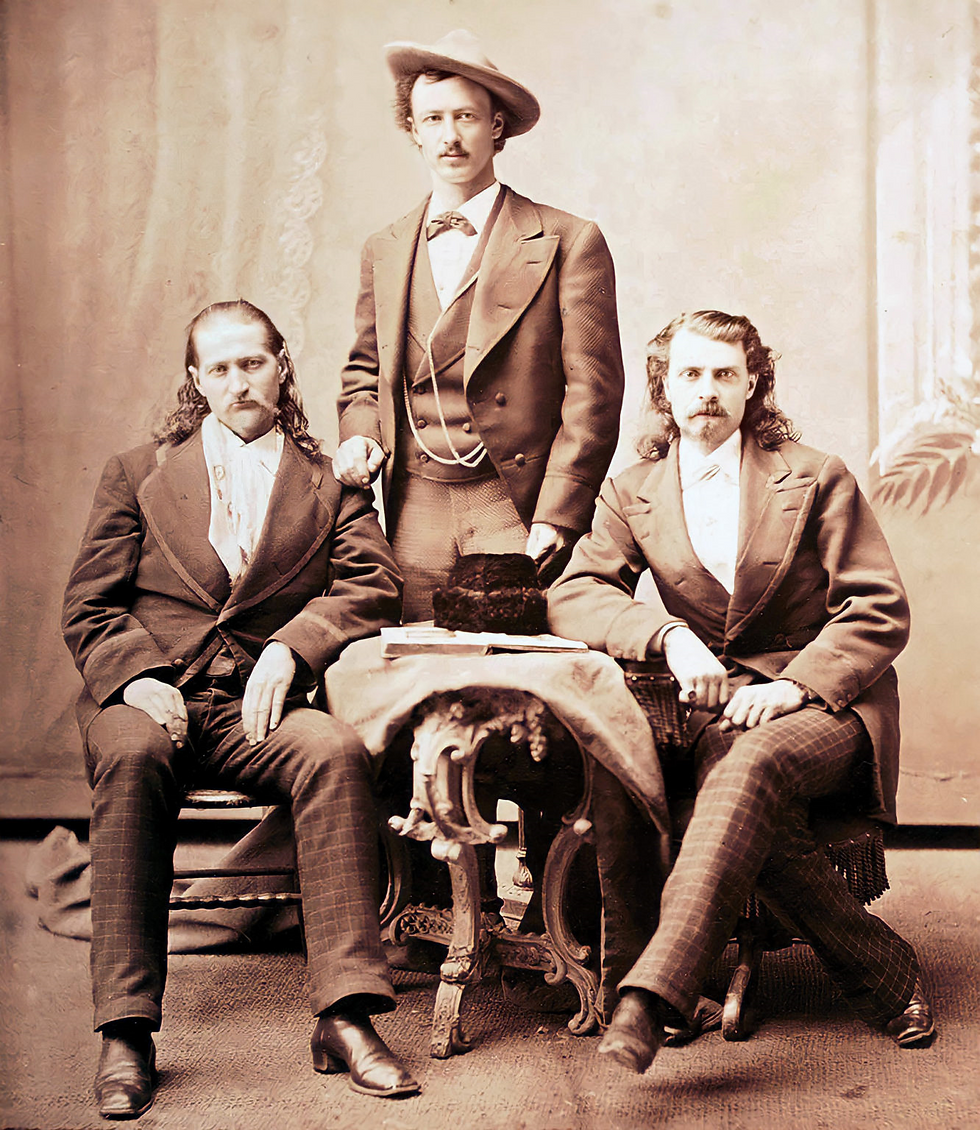
Jack was not in Deadwood when Hickok was killed. He left Philadelphia at the beginning of August, bought a pony and a pack mule in Bismarck, and went up the Yellowstone looking for General Terry's column. But he got the story, almost certainly from California Joe Milner or Colorado Charlie Utter, and he gave it to a New York Herald correspondent, who introduced him as a scout long and intimately connected with Wild Bill:
"Early in August Wild Bill was at Deadwood City, Dakota, where there is about the roughest and worst population in the West, made up largely of outlaws, gamblers and roughs. Here he met one Jack McCall, a cross-eyed fellow, who was a gambling sharp and a sort of 'no-good.' He challenged Bill to a game of poker, in which Bill beat him. At the last deal in the game, McCall overbet his hand; that is, he bet $10, and when Bill called him and took the cards McCall had only $7.50. Bill mildly remonstrated with him, saying, 'You don't want to overbet your hand. That's no way to play cards.' McCall said he hadn't another 'red,' upon which Bill kindly gave him enough to pay for his lodging and his breakfast. "Next day Bill was sitting in the saloon playing a quiet game with a party of gentlemen. The play was proceeding pleasantly enough, with several looking on, McCall being in another part of the room. Suddenly, before anyone noticed him, McCall stood behind Bill, who remained seated at the table. To draw his revolver, place it within a few inches of the back of Bill's head and to fire, exclaiming, 'Take that, damn you!' was the work of a few seconds. The ball entered a little to the right of the centre at the back of the head, and came out below the right eye. Bill stiffened himself and fell back in his chair dead, without a groan, and probably never knew who had killed him. The cowardly deed was so quickly done that before those present could seize the murderer he had begun backing toward the door, holding his revolver in front of him and threatening to kill any man who moved. "The bullet that killed Bill passed out below his right eye and buried itself in the arm of his opponent in the game, a steamboat captain on the Upper Missouri . . . the man will probably be disabled for life. "McCall was subsequently arrested and put through the form of a trial by a miners' court chosen at hazard in an impromptu, informal manner. He was acquitted. After McCall's acquittal California Joe, General Custer's old guide and a good, honest fellow who was a friend of Bill's, met McCall on the street and told him very significantly that he thought he had stayed in Deadwood long enough. McCall thereupon left town, and California Joe was subsequently killed in the same feud."

McCall's defense before the miners was that Hickok had killed his brother in Abilene and that he had come for revenge. The jury took it. He rode out of Deadwood that night — and here the accounts part company. Jack's Herald narrative has California Joe simply telling him to go. Judge W. L. Kuykendall, who presided over the Deadwood trial, remembered it differently, and put Texas Jack in the saddle: McCall fleeing in the darkness "with California Joe and Texas Jack, friends of Wild Bill, in hot pursuit."

What is certain is that McCall could not keep quiet. He talked, he was arrested, and he was taken to Yankton, then the capital of Dakota Territory. The second trial was held not to be double jeopardy, because Deadwood sat on unceded Lakota land under the Fort Laramie Treaty — a mining camp with no lawful court in it. The first verdict was a nullity. This time the jury convicted, and Jack McCall was hanged on March 1, 1877.
Hickok's biographer Joseph Rosa allowed that McCall's pistol might be read as "an instrument of fate," and that Wild Bill had in some sense outlasted the country that produced him. Perhaps. But a man who spent his last years walking down the middle of the street, never drinking in the same saloon two nights running, was not waiting on fate. He knew exactly what was coming for him. He simply could not watch every door.
A century and a half on, no man exemplifies the West when it was Wild more than Wild Bill.

Comments